



Chiropractic credentialing services help Doctors of Chiropractic (DCs) enroll with Medicare, Medicaid, and commercial insurance networks so they can provide covered services and receive reimbursement. The process verifies provider qualifications, licenses, NPI information, malpractice coverage, and professional history before payer approval.
Health Quest Billing helps chiropractic practices manage the complete credentialing process, including CAQH ProView updates, payer enrollment, provider verification, contracting support, and ongoing credential maintenance.
Chiropractic Credentialing Overview
| Category | Details |
|---|---|
| Purpose | Verify chiropractor qualifications and activate insurance participation |
| Managed By | CMS Medicare, State Medicaid Programs, Commercial Insurance Payers |
| Enrollment Systems | PECOS, CAQH ProView, State Medicaid Portals, Payer Portals |
| Required Identifiers | NPI, Tax ID/EIN, Chiropractic License |
| Timeline | 30–180 days depending on payer |
| Outcome | In-network participation and billing eligibility |
What Are Chiropractic Credentialing Services?
Professional chiropractor credentialing services help practices manage payer enrollment, CAQH, Medicare, Medicaid, commercial insurance applications, contracting, and ongoing provider maintenance. The process verifies a provider’s education, state license, NPI, malpractice insurance, work history, and other professional qualifications through Primary Source Verification (PSV).
Credentialing verifies a provider’s qualifications, while provider enrollment activates billing privileges with insurance payers. Most chiropractors must complete both steps before they can participate in insurance networks.
Professional credentialing companies manage the entire process, helping practices reduce paperwork, avoid enrollment errors, and speed up payer approvals.
Services typically include:
- Initial provider credentialing
- Medicare enrollment and revalidation
- Medicaid enrollment
- Commercial insurance enrollment
- CAQH profile management
- Insurance contracting
- Group and multi-state enrollment
- Recredentialing and provider updates
- Credentialing status tracking
Why Credentialing Matters for Chiropractors
Credentialing helps chiropractors establish active relationships with Medicare, Medicaid, and commercial insurance payers so they can bill for covered services. Inaccurate provider information, outdated CAQH profiles, or expired credentials can delay enrollment and create reimbursement problems.
As practices add providers, locations, or insurance networks, ongoing chiropractic credentialing helps maintain payer participation, support accurate billing, and reduce avoidable administrative delays.
What’s Included in Chiropractic Credentialing Services?
Professional chiropractic credentialing services manage the entire provider enrollment process from initial applications to ongoing credential maintenance. This helps practices reduce administrative workload, avoid enrollment delays, and maintain uninterrupted participation with insurance networks.
CAQH Profile Management
Most commercial insurance companies use CAQH ProView to verify provider information. Credentialing specialists create, update, and maintain CAQH profiles, upload required documents, and complete regular attestations to keep provider records current.
Medicare Enrollment
Medicare enrollment includes submitting applications through PECOS, obtaining a PTAN, completing Medicare revalidation, and maintaining provider records to ensure continued billing eligibility.
Medicaid Enrollment
Since Medicaid requirements vary by state, credentialing specialists prepare state-specific applications, submit required documentation, and monitor enrollment until approval.
Commercial Insurance Enrollment
Providers are enrolled with major commercial payers such as Blue Cross Blue Shield, Aetna, Cigna, UnitedHealthcare, Humana, and regional health plans, helping practices expand their in-network patient base.
Insurance Contracting
After credentialing approval, providers must complete payer contracts before billing can begin. Credentialing services track participation agreements, contract status, and effective dates to ensure timely activation.
Recredentialing & Provider Maintenance
Credentialing is an ongoing process. Specialists manage recredentialing, Medicare revalidation, CAQH updates, provider demographic changes, new practice locations, ownership changes, and provider additions to help practices maintain uninterrupted insurance participation.
Chiropractic Insurance Contracting Support
After credentialing approval, providers may need payer contracts before becoming active in-network participants.
Health Quest Billing helps manage:
- Contract status tracking
- Effective dates
- Participation agreements
- Payer communication
Step-by-Step Chiropractic Credentialing Process
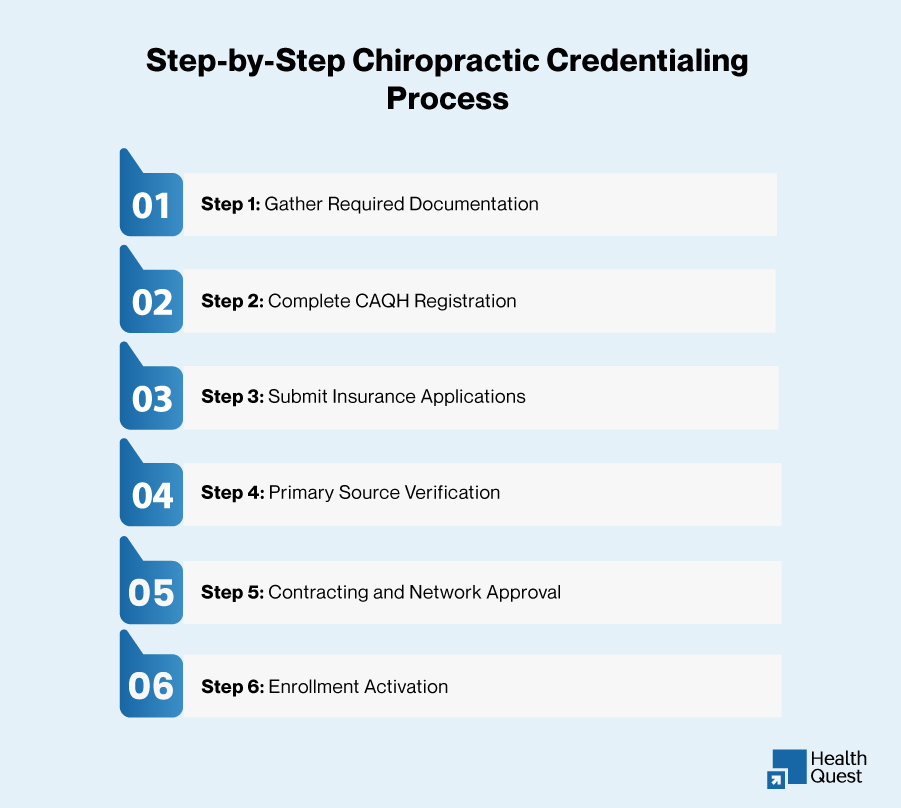
Although each insurance payer has its own requirements, most chiropractic credentialing follows the same six-step process. Completing each step accurately helps reduce delays and speeds up insurance approval.
1. Gather Required Documents
Collect all required provider and practice information, including your chiropractic license, NPI, CV, malpractice insurance, Tax ID, and business details. Ensure all information is accurate and consistent across every document.
2. Complete Your CAQH Profile
Create or update your CAQH ProView profile, upload supporting documents, and complete attestation. Most commercial insurers use CAQH to verify provider information during credentialing.
3. Submit Payer Applications
Apply to the insurance networks you plan to join, including Medicare, Medicaid, and commercial insurance carriers. Complete applications with accurate documentation to minimize processing delays.
4. Primary Source Verification (PSV)
Insurance companies verify your education, state license, work history, malpractice coverage, and other credentials directly with the original issuing organizations before approving your application.
5. Contract Approval
After credentialing is approved, participating payers issue provider contracts and fee schedules. Reviewing and signing these agreements officially establishes your in-network participation.
6. Active Enrollment & Ongoing Maintenance
Once enrollment becomes active, your practice can begin billing for covered chiropractic services. To maintain participation, keep your CAQH profile, licenses, malpractice insurance, and provider information up to date, and complete recredentialing or Medicare revalidation when required.
Best Practice: Start the credentialing process 90–120 days before opening a new practice, hiring a chiropractor, or joining new insurance networks to avoid delays in reimbursement.
Documents Required for Chiropractic Credentialing
Preparing accurate documentation before submitting applications helps reduce credentialing delays and speeds up payer approval. While requirements vary by insurance company, most Medicare, Medicaid, and commercial payers request the same core provider and practice documents.
Before applying, ensure your information is consistent across your state license, NPI Registry (NPPES), CAQH profile, IRS records, and payer applications. Even small discrepancies such as a different practice address or Tax ID can delay enrollment.
Chiropractic Credentialing Checklist
- Active state chiropractic license
- National Provider Identifier (NPI)
- Current Curriculum Vitae (CV)
- W-9 form
- Professional malpractice insurance certificate
- CAQH ProView profile
- Tax Identification Number (TIN/EIN)
- Electronic Funds Transfer (EFT) and ERA forms (if required)
- Practice ownership and legal entity documents
- Practice location and contact information
Common Chiropractic Credentialing Challenges
Even experienced chiropractic practices can face credentialing issues that delay enrollment and impact revenue. Most problems are caused by incomplete information, missed deadlines, or payer-specific requirements, not provider qualifications.
The most common challenges include:
| Challenge | Potential Impact |
|---|---|
| Incomplete applications | Delayed approvals and additional documentation requests |
| Expired or unattested CAQH profile | Commercial payer enrollment may be delayed or suspended |
| NPI, license, or Tax ID mismatches | Claim rejections and extended credentialing reviews |
| Missed recredentialing deadlines | Loss of in-network status and payment interruptions |
| Medicare revalidation delays | Temporary deactivation of Medicare billing privileges |
| State-specific Medicaid requirements | Longer processing times and additional compliance reviews |
| Practice ownership or legal entity changes | Required payer updates before claims can be processed |
| New practice locations or address changes | Enrollment updates needed to avoid billing disruptions |
Many of these issues are preventable with proactive credentialing management. Regularly updating provider records, maintaining an accurate CAQH profile, responding promptly to payer requests, and tracking renewal deadlines can help keep your enrollment active and your revenue cycle running smoothly.
How Long Does Chiropractic Credentialing Take?
Credentialing timelines vary based on the payer, state requirements, provider type, and application accuracy. While some Medicare enrollments are completed within a month, commercial insurance credentialing may take several months due to contract reviews and payer backlogs.
| Credentialing Type | Average Time |
|---|---|
| Medicare Enrollment | 30–90 days |
| Medicaid Enrollment | 45–120 days* |
| Commercial Insurance Enrollment | 60–180 days |
| Recredentialing | 30–60 days |
Actual timelines vary based on payer requirements, documentation accuracy, and state regulations.
Benefits of Professional Chiropractic Credentialing Services
Managing chiropractic credentialing requires ongoing coordination with Medicare, Medicaid, commercial insurance carriers, and multiple enrollment systems. Professional credentialing services help reduce administrative burden, improve enrollment accuracy, and keep providers billing without interruption.
Our chiropractic credentialing specialists help you:
- Complete accurate provider credentialing and payer enrollment applications
- Manage Medicare, Medicaid, and commercial insurance enrollment
- Create, update, and maintain CAQH ProView profiles
- Track application status and communicate with insurance carriers
- Coordinate insurance contracting and provider participation
- Manage recredentialing, Medicare revalidation, and provider updates
- Support multi-provider, multi-location, and multi-state credentialing
- Reduce enrollment delays, claim denials, and reimbursement interruptions
- Free your staff to focus on patient care instead of administrative paperwork
Whether you’re opening a new chiropractic practice, adding associate chiropractors, or expanding into new insurance networks, professional credentialing support helps your practice become credentialed, contracted, and billing-ready faster.
Need Help with Chiropractic Credentialing?
Whether you are adding a new chiropractor, joining additional insurance networks, or expanding your practice, a dedicated chiropractor credentialing service can help streamline enrollment and payer follow-up. Combined with chiropractic eligibility & insurance verification, these processes can help keep your practice billing-ready and reduce preventable reimbursement issues.
Schedule a free consultation to streamline credentialing and keep your practice billing-ready.