
In 2026, chiropractic credentialing services are more important than ever. With stricter payer audits, evolving insurance policies, expanded telehealth regulations, and increasing compliance standards, chiropractors must maintain accurate and up-to-date credentials to protect revenue, legal standing, and patient trust.
Whether you are opening a new chiropractic clinic, adding associate providers, or expanding into multiple states, credentialing is not just an administrative requirement, it is the backbone of your practice’s financial health.
This comprehensive guide explains everything you need to know about chiropractic credentialing, including the process, regulatory bodies, benefits, common challenges, and how professional credentialing services can help you grow.
What Are Chiropractic Credentialing Services?
Chiropractic credentialing services are professional services that help chiropractors meet the standards required to practice legally and to be recognized by insurance companies, healthcare organizations, and regulatory bodies. These services ensure chiropractors are eligible for insurance reimbursement and provide legal protection for their practice.
Credentialing involves verifying a chiropractor’s education, qualifications, licensing, malpractice insurance, and other factors. Essentially, it’s a way to ensure that a chiropractor meets the standards of care and professionalism required by regulatory authorities and insurance networks.
Importance of Credentialing Services
Credentialing services streamline the often complex administrative processes involved in verifying a chiropractor’s qualifications. By outsourcing credentialing, chiropractors save time and ensure their credentials are fully compliant with state and national regulations. Additionally, these services help chiropractors maintain high standards of care and reduce the risk of legal and financial complications.
The Role of National and State Agencies in Chiropractic Credentialing
Chiropractic credentialing is overseen by both national and state-level regulatory bodies. At the national level, the National Board of Chiropractic Examiners (NBCE) plays a significant role in certifying chiropractic professionals. State licensing boards are responsible for issuing the initial licensure for chiropractors and ensuring compliance with state-specific regulations.
In addition, third-party organizations, such as the Council on Chiropractic Education (CCE), accredit chiropractic colleges and programs. These agencies verify the educational background and training that chiropractors must complete to practice legally.
Why Chiropractic Credentialing Is More Difficult in 2026
Changes in Healthcare Regulations
The landscape of healthcare is changing rapidly, and the credentialing process is evolving along with it. 2026 brings stricter regulations and more complex requirements. Government policies are tightening, and healthcare insurance plans are becoming more complicated, making credentialing a time-sensitive and challenging task. Without the proper credentials, chiropractors risk losing access to insurance networks, potentially excluding them from reimbursement for patient care.
One chiropractor, Dr. Sarah Jensen, learned this the hard way. She failed to stay ahead of regulatory changes and wasn’t aware of new compliance requirements. As a result, she lost her ability to bill certain insurance companies, which caused significant financial strain on her practice. By the time she updated her credentials, the damage was done. Her practice had to cut back on services, and some of her patients found new providers.
This is a scenario you can avoid by staying proactive and ensuring your credentials are up to date.
Rising Compliance Demands
Credentialing requirements are becoming more stringent. As healthcare technology and insurance practices advance, insurance companies and regulatory bodies now demand more precise records and compliance with the latest standards. Chiropractors must stay on top of these changes, or they risk losing access to important networks or facing legal repercussions.
If you don’t keep your credentials current, you could face increased audits, billing denials, and possibly even fines. Ensuring your credentials are consistently updated isn’t just a regulatory checkbox; it’s critical for long-term business survival.
Why Do Patients Value Chiropractors Who Are Credentialed?
Building Trust and Credibility
For patients, seeing a credentialed chiropractor provides reassurance. It shows they are in the hands of a trained professional who adheres to strict legal and ethical standards. Credentialed chiropractors are often seen as more trustworthy and reliable, which helps build patient loyalty and retention.
Impact on Patient Outcomes
Credentialed chiropractors are typically required to complete continuing education courses. This ensures they stay updated on the latest treatments, technologies, and techniques. Ongoing professional development not only enhances patient outcomes but also ensures your practice remains competitive in an ever-evolving healthcare landscape.
Protecting Your Practice from Lawsuits with Chiropractic Credentialing
Credentialing is a powerful tool in risk management. When your credentials are verified and in good standing, your practice is more likely to be compliant with regulations, minimizing the risk of lawsuits and malpractice claims. Proper credentialing can even help with insurance coverage, protecting you from financial loss in case of legal disputes.
Example: Dr. Emily Patel, a chiropractor in Texas, was involved in a malpractice lawsuit after a patient claimed improper care. Fortunately, her up-to-date credentialing records were a critical defense in court, showing that she adhered to all legal standards. This not only helped win the case but also helped protect her reputation and avoid financial penalties.
By maintaining up-to-date credentials, you can protect your practice from unnecessary legal trouble and enhance your patient care.
Steps to Get Chiropractic Credentialing: A Simple Guide for Providers
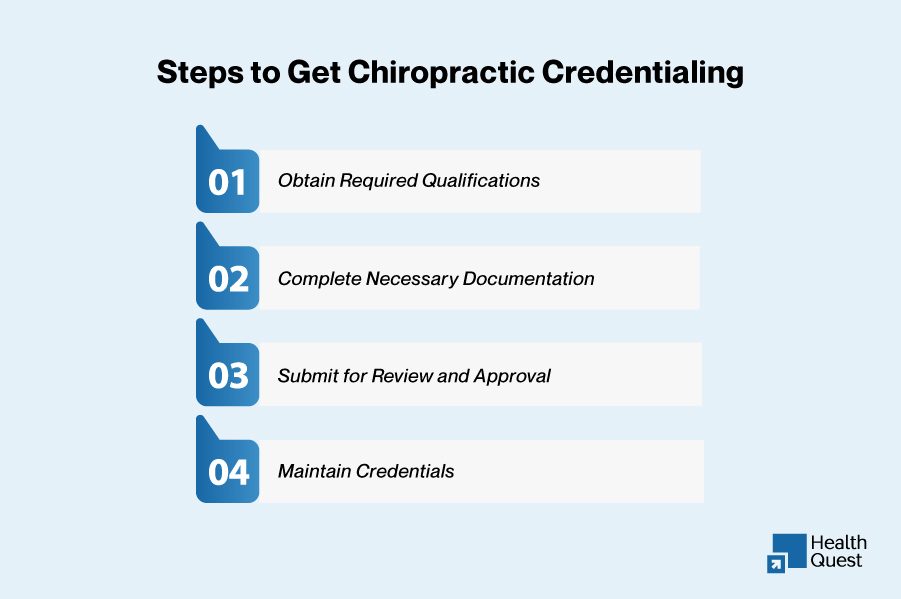
1. Complete Educational and Licensing Requirements
Ensure you’ve met all the necessary education and training for chiropractic care. This includes holding a valid state license and completing any required continuing education courses to stay current.
2. Gather Required Documentation
Collect the essential documents needed for credentialing, such as your diploma, proof of state licensure, malpractice insurance, and any other certifications relevant to your practice.
3. Submit Your Application for Review
Once your documents are ready, submit your credentialing application to the relevant insurance companies or regulatory bodies. The review process can take several weeks or even months, so it’s important to start early to avoid delays.
4. Keep Your Credentials Up to Date
Credentialing is an ongoing process. Make sure to renew your certifications on time and stay informed about any new regulations or requirements that could affect your practice.
Chiropractic Credentialing Checklist
Essential Documents for Credentialing
- Proof of Education: Transcripts and diplomas from accredited chiropractic schools.
- License Verification: State-issued license and verification from the state chiropractic board.
- Malpractice Insurance: Documentation of coverage.
- National Board Certification: If applicable.
- Continuing Education: Evidence of completed courses.
Tips for Staying Organized
- Keep a dedicated file for all credentialing-related documents.
- Use a calendar to track renewal dates and deadlines.
- Consider working with a credentialing service to avoid delays or errors.
How Credentialing Benefits/Impacts Chiropractic Practices
Financial Impact
Credentialing opens the door to insurance reimbursement, which is essential for a chiropractic practice’s financial health. Being credentialed enables chiropractors to participate in a variety of insurance networks, resulting in an influx of patients covered by these insurers. Additionally, credentialing allows chiropractors to avoid costly out-of-pocket expenses that can arise when services are not reimbursed.
Business Growth and Patient Acquisition
Credentialing boosts a practice’s visibility and reputation, helping chiropractors attract new patients. Patients are more likely to trust credentialed chiropractors, as it assures them that they are receiving care from professionals who meet high standards. With proper credentialing, chiropractors can build a strong patient base, leading to practice growth and long-term success.
Common Challenges and How to Overcome Them
Navigating the credentialing process can be challenging, but understanding common obstacles can help you prepare. Here are some of the most frequent challenges chiropractors face and how to tackle them:
1. Time-Consuming Process
Credentialing can take weeks or even months to complete. The paperwork, verification, and approval processes require attention to detail and patience.
How to Overcome It:
Work with a credentialing service like Health Quest Billing to handle the paperwork, ensuring accuracy and timely submission. This frees up your time so you can focus on your practice, knowing the credentialing process is in good hands.
2. Dealing with Delays and Rejections
It’s not uncommon for applications to be delayed or even rejected. This can happen for various reasons, including missing documentation or application errors.
How to Overcome It:
If you face a delay or rejection, stay proactive. Contact the credentialing agency for clarification, address the issue promptly, and resubmit your application. Keeping track of all documents and maintaining a checklist can help prevent errors that lead to rejections.
3. Adapting to Complex Regulations
As regulations continue to evolve, staying compliant with state and national requirements can feel overwhelming. The evolving nature of insurance policies and healthcare standards only adds to the confusion.
How to Overcome It:
Stay informed about changes in regulations by subscribing to professional newsletters or partnering with a credentialing expert. By outsourcing credentialing tasks, you ensure compliance without constantly monitoring the regulatory landscape yourself.
4. Limited Access to Insurance Networks
Without proper credentialing, your practice may be excluded from major insurance networks, reducing patient referrals and reimbursements.
How to Overcome It:
Make credentialing a priority to maintain access to key insurance networks. Proper credentialing ensures that you’re eligible for reimbursements and helps your practice stay financially healthy. Regularly review and renew your credentials to avoid disruptions.
Why Are My Insurance Claims Being Denied?
One of the top causes of chiropractic claim denials is inactive or incomplete provider enrollment.
Common credentialing-related denial reasons:
-
Provider not linked to group NPI
-
Medicare revalidation not completed
-
CAQH profile expired
-
Tax ID mismatch
-
Address discrepancies
Centers for Medicare & Medicaid Services regularly deactivates providers who fail to respond to revalidation notices. During deactivation, claims cannot be paid even if services were medically necessary.
Credentialing accuracy directly impacts clean claim rates.
Do I Need CAQH for Chiropractic Credentialing?
Yes, Council for Affordable Quality Healthcare (CAQH) ProView is used by most commercial insurance carriers to verify provider information.
Important facts providers often miss:
-
CAQH must be re-attested every 120 days
-
Missing malpractice expiration updates can freeze applications
-
Address inconsistencies can delay panel approval
An outdated CAQH profile is one of the most common reasons credentialing stalls.
Can I See Patients While Waiting for Credentialing?”
Technically, yes but with financial risk.
Options include:
-
Seeing patients as out-of-network
-
Billing under a supervising provider (if allowed)
-
Holding claims until approval
However, most insurance companies will not backdate payments beyond 30–90 days, meaning you may permanently lose reimbursement for early visits.
Credentialing delays = revenue loss.
What Happens If My Credentialing Expires?
If your credentialing lapses:
-
You may be removed from payer directories
-
Claims will deny automatically
-
Patients may not find you in-network
-
Re-enrollment can take months
Some networks close panels periodically. If you miss your re-credentialing window, you may not regain access quickly.
How Many Insurance Panels Should a Chiropractor Join?
There is no universal number, but high-performing practices often participate in:
-
Medicare
-
Medicaid (if patient demographics justify)
-
4- 8 major commercial payers
Practices active in multiple panels report:
-
Higher patient acquisition
-
More stable monthly revenue
-
Less reliance on cash-only marketing
Being in-network expands accessibility and referral flow.
Why Providers Are Outsourcing Chiropractic Credentialing in 2026
The administrative burden has increased significantly.
Chiropractors report spending:
-
8–15 hours per week managing enrollment tasks
-
Multiple follow-ups per payer
-
Tracking revalidation deadlines manually
At the same time:
-
Payer audits are rising
-
Documentation requirements are stricter
-
Medicare compliance standards are tighter
Credentialing errors can cost practices 5-10% of annual revenue in preventable denials.
For a $600,000 practice, that could mean $30,000-$60,000 annually in avoidable losses.
How Health Quest Billing Can Help Your Practice with Chiropractic Credentialing
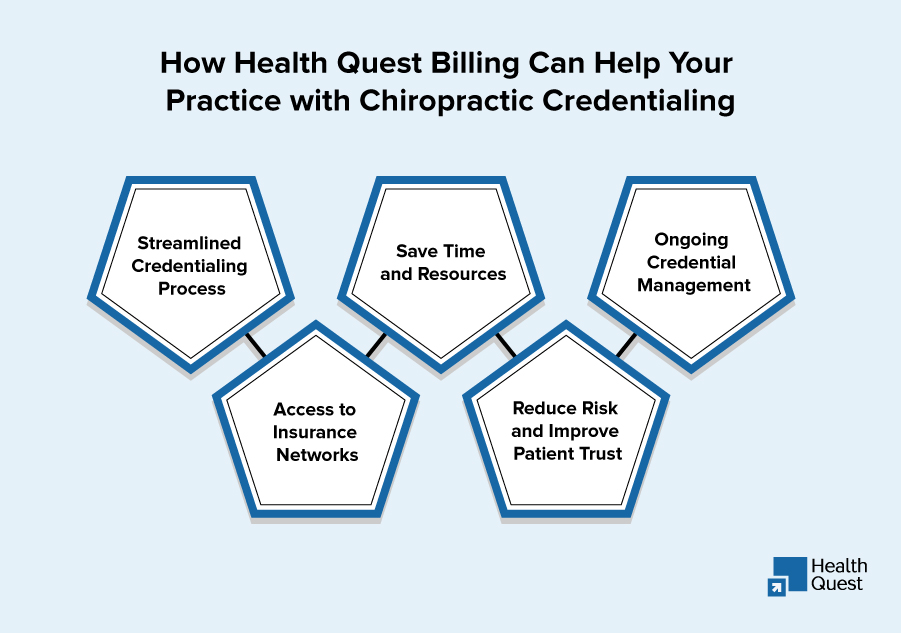
Take the stress out of chiropractic credentialing in 2026 with Health Quest Billing. We handle all your documentation, keep credentials up to date, and ensure compliance so you can focus on patients not paperwork. Stay connected to major insurance networks, get reimbursed faster, reduce risks, and build patient trust. With our expert support, your practice stays compliant, efficient, and ready for long-term growth.
Conclusion
Chiropractic credentialing is not just a regulatory requirement; it’s a crucial part of running a legally compliant, financially healthy, and reputable practice. Whether you’re new to credentialing or facing the growing complexities of 2026 regulations, staying proactive is key to your practice’s success. By following the steps in this blog, you can position your practice for growth, trust, and lasting success.
Ready to simplify your credentialing process and ensure your practice thrives? Let Health Quest Billing manage your credentialing needs so you can focus on delivering exceptional patient care. Contact us today to learn how our expert services can streamline the credentialing process and help your practice succeed in 2026 and beyond!