
Endocrinology AR management is becoming essential as every day a claim sits unpaid represents lost revenue that endocrinology practices cannot use for patient care, staff growth, technology upgrades, or operational expenses. In 2026, endocrinology providers are experiencing increasing reimbursement delays due to stricter payer policies, complex chronic disease management billing, prior authorization requirements, and growing scrutiny of high-cost services such as Continuous Glucose Monitoring (CGM), insulin pump therapy, Remote Patient Monitoring (RPM), and hormone replacement therapy.
Many practices now experience AR days exceeding 60, creating cash flow pressure and higher denial risk. This guide explains the key causes of delayed reimbursements and how effective endocrinology AR management can reduce AR days and improve cash flow in 2026.
What Is Endocrinology Accounts Receivable (AR) Management?
Endocrinology Accounts Receivable (AR) Management is the process of tracking, managing, and collecting payments owed after claims have been submitted to insurance companies. It includes claim follow-up, denial management, payment posting, underpayment recovery, prior authorization monitoring, appeals processing, and payer communication to ensure providers receive reimbursement for services rendered.
Unlike many episodic specialties, endocrinology practices often manage patients over months or years through recurring visits, chronic disease management programs, device monitoring, medication adjustments, and ongoing treatment plans. Because of this long-term care model, effective Endocrinology AR Management is critical for maintaining healthy cash flow, reducing aging receivables, minimizing write-offs, and improving overall revenue cycle performance.
Why High AR Days Are Costing Endocrinology Practices Revenue
Many providers view AR as a billing metric, but it directly affects overall practice performance.
1. Cash Flow Disruptions
Delayed reimbursements restrict access to working capital needed for payroll, provider compensation, technology upgrades, staff recruitment, and operational expenses.
2. Increased Revenue Leakage
The longer claims remain unpaid, the greater the risk of denials, underpayments, and write-offs.
3. Administrative Burden
Billing teams spend more time on claim corrections, appeals, payer communication, and follow-up activities when AR days rise.
4. Reduced Profitability
Delayed reimbursements increase collection costs while reducing overall net revenue.
5. Growth Limitations
Practices with high AR days often struggle to expand services, hire additional providers, or invest in new patient care technologies.
Why Endocrinology AR Days Are Rising in 2026
1. Increasing Payer Scrutiny
Commercial insurers and Medicare are closely reviewing high-cost endocrinology services to verify medical necessity and coverage eligibility. Claims involving Continuous Glucose Monitoring (CGM), insulin pump therapy, hormone replacement therapy, Remote Patient Monitoring (RPM), and Chronic Care Management (CCM) often undergo additional review before payment is approved.
Insufficient documentation, missing clinical evidence, or incomplete treatment histories frequently result in delayed reimbursements and denial risk.
2. CGM & Insulin Pump Billing Complexity
CGM and insulin pump services continue to be among the most challenging endocrinology claims to bill successfully.
Common reimbursement barriers include:
- Missing glucose monitoring records
- Incomplete physician documentation
- Incorrect diagnosis linkage
- Device coding errors
- Coverage eligibility issues
Because these services involve ongoing monitoring and significant payer oversight, even small billing errors can substantially increase AR aging.
3. Prior Authorization Challenges
Prior authorization remains one of the largest contributors to delayed endocrinology reimbursement.
Many payers require extensive clinical documentation before approving services such as:
| Service | Common Authorization Requirement |
|---|---|
| Continuous Glucose Monitoring (CGM) | Medical necessity documentation and glucose logs |
| Insulin Pump Therapy | Prior treatment history and physician justification |
| Osteoporosis Injections | Clinical criteria verification |
| Hormone Replacement Therapy | Treatment history documentation |
| Remote Patient Monitoring (RPM) | Chronic care eligibility requirements |
| Thyroid Procedures | Diagnostic imaging and supporting clinical records |
Missing information, expired approvals, authorization mismatches, and delayed payer responses often add weeks or months to the reimbursement process.
4. Medicare Documentation Requirements
Medicare contractors continue to strengthen documentation standards for endocrinology services.
Providers must clearly document:
- Symptoms and diagnoses
- Treatment history
- Failed conservative therapies
- Laboratory findings
- Medical necessity
- Functional impact on the patient
Incomplete records remain one of the leading causes of denials, audits, and payment delays.
5. Staffing Shortages
Many endocrinology practices continue to face staffing shortages while managing increasingly complex billing requirements.
This often leads to:
- Delayed claim submission
- Missed appeal opportunities
- Inconsistent follow-up workflows
- Increased denial rates
- Growing AR balances
Without dedicated AR management processes, unresolved claims can quickly age into high-risk receivable categories.
6. AI-Powered Claim Reviews
Insurance companies are increasingly using artificial intelligence and automated editing systems to review claims before payment.
These systems can quickly identify:
- Coding inconsistencies
- Modifier errors
- Missing documentation
- Coverage conflicts
- Diagnosis mismatches
As a result, claims that previously may have passed manual review are now being flagged automatically, increasing denial rates and extending reimbursement timelines.
Most Common Endocrinology Claims That Get Stuck in AR
Not all endocrinology claims carry the same reimbursement risk. Certain services are more likely to experience delays due to medical necessity reviews, authorization requirements, documentation deficiencies, and payer-specific coverage policies.
| Service | Common AR Issue | Revenue Impact |
|---|---|---|
| Continuous Glucose Monitoring (CGM) | Missing glucose logs or documentation | Claim denials and delayed payments |
| Insulin Pump Therapy | Authorization and eligibility issues | Extended AR aging |
| Remote Patient Monitoring (RPM) | Incomplete documentation | Payment holds |
| Hormone Replacement Therapy | Medical necessity reviews | Delayed reimbursement |
| Osteoporosis Injections | Coding and coverage errors | Underpayments |
| Chronic Care Management (CCM) | Incomplete time tracking | Denials and audit risk |
| Thyroid Procedures | Diagnosis-to-procedure mismatches | Claim rejections |
Identifying which services consistently age in AR helps practices focus resources on the areas creating the greatest revenue risk.
Best Strategies to Reduce AR Days in Endocrinology Practices
Reducing AR days requires more than submitting claims on time. Successful practices focus on preventing delays before they occur while actively working aging accounts before they become write-offs.
1. Strengthen Eligibility Verification
Many denials begin before the patient is seen. Eligibility should be verified before every visit to confirm:
- Active insurance coverage
- Deductibles and copays
- Referral requirements
- Authorization needs
- Coverage limitations
Real-time verification reduces preventable denials and reimbursement delays.
2. Improve Prior Authorization Workflows
Authorization management should begin before treatment is scheduled.
Best practices include:
- Dedicated authorization tracking
- Automated alerts
- Documentation checklists
- Expiration monitoring
- Payer-specific workflows
This reduces authorization-related AR delays.
3. Submit Claims Within 24-48 Hours
Faster claim submission accelerates the entire reimbursement cycle.
Practices should:
- Automate charge capture
- Review claims daily
- Resolve edits immediately
- Monitor submission timeliness
Early submission often leads to faster payment.
4. Perform Specialty-Specific Coding Audits
Endocrinology billing requires expertise in:
- CPT coding
- HCPCS coding
- ICD-10 diagnosis selection
- Modifier application
- Device billing compliance
Regular audits identify revenue leaks before claims are submitted.
5. Automate AR Follow-Up
Manual AR follow-up often results in missed opportunities.
Modern billing systems can:
- Flag aging claims automatically
- Prioritize high-dollar balances
- Trigger payer follow-ups
- Monitor unresolved accounts
Automation helps prevent claims from aging beyond 60–90 days.
6. Monitor Payer-Specific Denial Trends
Each payer has different denial patterns.
Tracking denial trends helps identify:
- High-risk insurers
- Common denial reasons
- Documentation gaps
- Coding issues
- Authorization problems
Addressing these issues proactively improves reimbursement speed.
7. Partner With an Endocrinology Billing Specialist
Specialty-focused billing teams understand the unique reimbursement challenges associated with endocrinology services.
Benefits include:
- Higher clean claim rates
- Faster reimbursements
- Reduced denials
- Stronger AR performance
- Improved collections
How AI Is Helping Endocrinology Practices Reduce AR Days
Artificial intelligence is rapidly changing how endocrinology practices manage Accounts Receivable (AR). While insurers increasingly use AI-driven systems to review claims and detect billing errors, providers are also leveraging automation to improve claim accuracy, reduce denials, and accelerate reimbursements.
Modern AI-powered billing solutions can:
- Identify coding errors before submission
- Predict denial risk based on payer behavior
- Automate claim scrubbing
- Prioritize aging claims for follow-up
- Monitor authorization status
- Detect underpayments and reimbursement trends
For endocrinology practices managing large volumes of CGM, insulin pump, RPM, and chronic care management claims, automation helps reduce administrative workload while improving financial performance.
Key AR Metrics Every Endocrinology Practice Should Track
Monitoring performance metrics helps identify reimbursement bottlenecks before they impact revenue.
| KPI | Recommended Benchmark |
| Average AR Days | Under 40 Days |
| Clean Claim Rate | 95%+ |
| Denial Rate | Below 5% |
| First-Pass Resolution Rate | 90%+ |
| Net Collection Rate | 95%+ |
| Authorization Approval Rate | 95%+ |
Practices consistently exceeding these benchmarks typically experience stronger financial performance and healthier cash flow.
AR Days Above 45? Your Revenue Cycle Needs Attention
When endocrinology claims remain unpaid for more than 45 days, denial risk, write-offs, and cash flow problems begin to increase. HealthQuest Billing combines endocrinology billing expertise, AI-powered claim monitoring, proactive authorization management, and aggressive AR follow-up strategies to help practices reduce AR days, improve collections, and accelerate reimbursements.
From $385,000 in Aging AR to Faster Collections: An Endocrinology AR Recovery Example
A multi-provider endocrinology practice was experiencing growing reimbursement delays, with more than $385,000 tied up in aging accounts receivable. The largest contributors included unresolved CGM claims, insulin pump authorization delays, Medicare documentation reviews, and unpaid Remote Patient Monitoring (RPM) services.
After conducting a comprehensive AR review and prioritizing high-value aging claims, the practice improved collections, reduced AR days, and strengthened cash flow performance.
Case Study: Endocrinology AR Recovery Project
The Challenge
| Key Challenges Identified During AR Review | Impact on Practice |
|---|---|
| $385,000+ in outstanding Accounts Receivable | Significant earned revenue remained uncollected |
| 31% of claims aged beyond 90 days | Increased write-off risk |
| Backlog of CGM and insulin pump claims | High-value services remained unpaid |
| Prior authorization delays | Claims faced extended reimbursement timelines |
| Medicare documentation reviews | Slower payment cycles and higher AR days |
| Limited follow-up on aging claims | Revenue recovery opportunities were missed |
Result: The practice maintained strong patient volume, but a substantial portion of revenue was trapped in aging AR.
Our Findings
| Root Cause Identified | Observation |
|---|---|
| Missing CGM documentation | Claims lacked supporting glucose records |
| Authorization discrepancies | Approval information did not match submitted claims |
| Medical necessity reviews | High-cost therapies triggered payer scrutiny |
| Unresolved denials | Appeals had not been submitted timely |
| Aging RPM claims | Multiple claims remained unpaid beyond 120 days |
The Solution
| AR Recovery Strategy | Objective |
|---|---|
| Prioritized high-value aging claims | Accelerate recovery of largest balances |
| Corrected authorization issues | Remove reimbursement holds |
| Submitted missing clinical documentation | Support medical necessity reviews |
| Appealed denied and underpaid claims | Recover lost revenue |
| Implemented weekly AR follow-up workflows | Reduce future AR aging |
The Outcome
Within four months, the practice:
- Reduced AR days from 68 to 41 days
- Recovered over $240,000 in aging receivables
- Reduced claims over 90 days by 43%
- Improved clean claim rates to 96%
- Increased monthly cash collections by 18%
Most importantly, claims that had been sitting unresolved for months were actively worked and converted into collected revenue before becoming write-offs.
How HealthQuest Billing Helps Endocrinology Practices Reduce AR Days
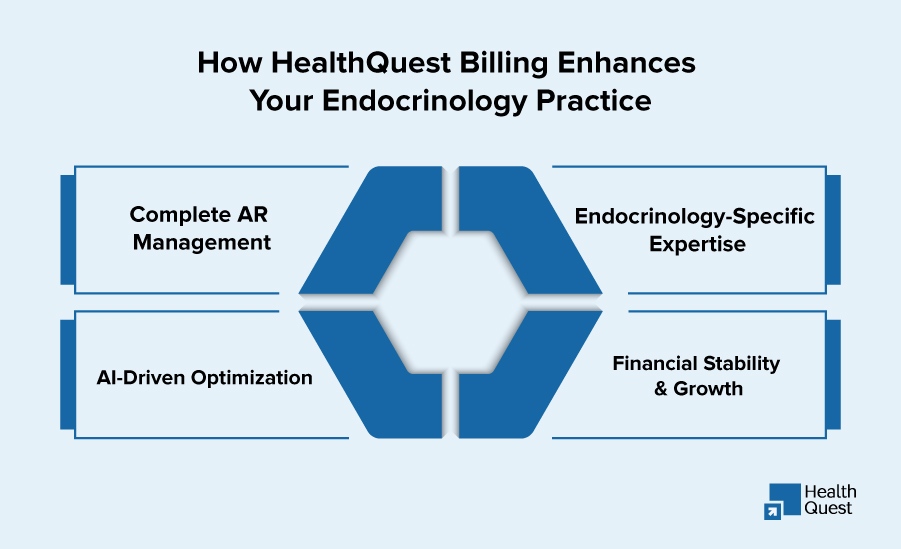
HealthQuest Billing provides specialized endocrinology revenue cycle management services designed to reduce AR aging, improve collections, strengthen cash flow, and maximize reimbursements in 2026. Our team understands the billing complexities associated with diabetes management, CGM devices, insulin pumps, hormone therapies, osteoporosis treatments, and chronic care services.
We focus on accurate CPT and ICD-10 coding, proactive prior authorization management, payer-compliant documentation workflows, denial prevention, and rapid claim follow-up to help practices reduce reimbursement delays and improve first-pass claim acceptance rates. Through AI-driven billing optimization, denial trend analysis, AR monitoring, and specialty-focused revenue cycle strategies, HealthQuest Billing helps endocrinology practices minimize administrative burden, accelerate payments, reduce revenue leakage, and maintain long-term financial stability while staying fully compliant with evolving Medicare and commercial payer regulations.